
Using AED
Automated external defibrillators (AED) can help save lives during sudden cardiac arrest. However, even after training, remembering the steps to use an AED the right way can be difficult. In order to help keep your skills sharp, we’ve created a quick step-by-step guide that you can print up and place on your desk. This way, you can review the AED steps any time, at your convenience, and keep them fresh in your memory.
Before Using the AED
These AED steps should be used when caring for a non-breathing child aged 8 or older who weighs more than 55 pounds, or an adult.
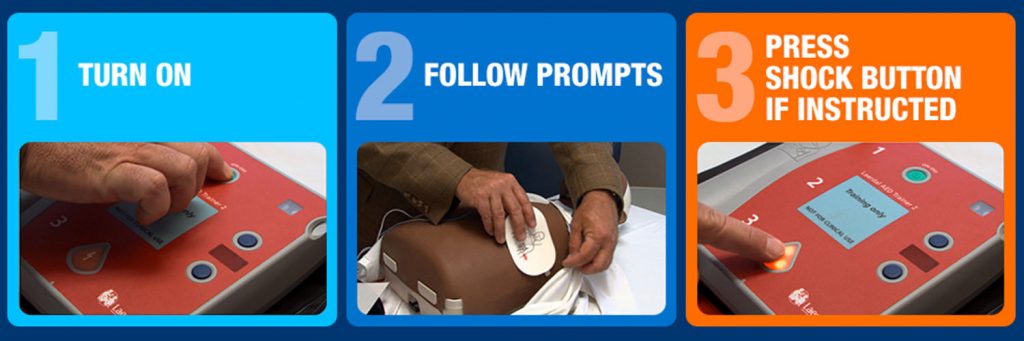
After checking the scene and ensuring that the person needs help, you should ask a bystander to call 911 for help, then:
- Turn on the AED
- Follow the visual and/or audio prompts.
-
- Open the person’s shirt and wipe his or her bare chest dry.
- Attach the AED pads, and plug in the connector (if necessary).
- Make sure no one is, including you, is touching the person. Tell everyone to “stand clear.”
- Push the “analyze” button (if necessary) and allow the AED to analyze the person’s heart rhythm.
3. If the AED recommends that you deliver a shock to the person,
-
- make sure that no one, including you, is touching the person
- tell everyone to “stand clear.”
- press the “shock” button.
Begin CPR after delivering the shock. Or, if no shock is advised, begin CPR. Perform 2 minutes (about 5 cycles) of CPR and continue to follow the AED’s prompts. If you notice obvious signs of life, discontinue CPR and monitor breathing for any changes in condition.